Yes, a tow truck can remove a car with four flat tires in most situations, but the pickup must be planned around the details. A tow truck remove car with flat tires request depends on whether the wheels still roll, how much clearance the car has, where it is parked, and whether the truck can reach it safely. A car sitting low on completely deflated tires needs different handling than one on tires that still hold some shape. The owner’s job is to give the towing service accurate information before the truck is dispatched.
Here is a practical look at the conditions a towing company typically weighs before sending a truck:
Vehicle condition
Likely towing considerations
What to tell the dispatcher
Flat but rolling tires
The car can usually be moved a short distance by hand. A flatbed is the safest option because the tires do not need to hold air during loading.
Tires are low but still hold some shape, and the car can roll if pushed.
Fully deflated tires
The body sits very low, which can make it hard to get standard lifting gear underneath. A low clearance tow truck or extra lifting help may be needed.
All four tires are completely flat and the car is resting close to the ground.
Seized wheels
The car will not roll even if the tires were inflated. The operator needs equipment designed for seized wheels towing and must avoid forcing the suspension or brakes.
The wheels are seized and the car cannot roll at all.
Tight parking position
A full-size flatbed may not fit. The operator has to judge whether the truck can line up safely or whether the car needs to be moved first.
Exact parking location, available space, and any vehicles or obstacles blocking the route.
What a tow truck needs to remove a car with flat tires
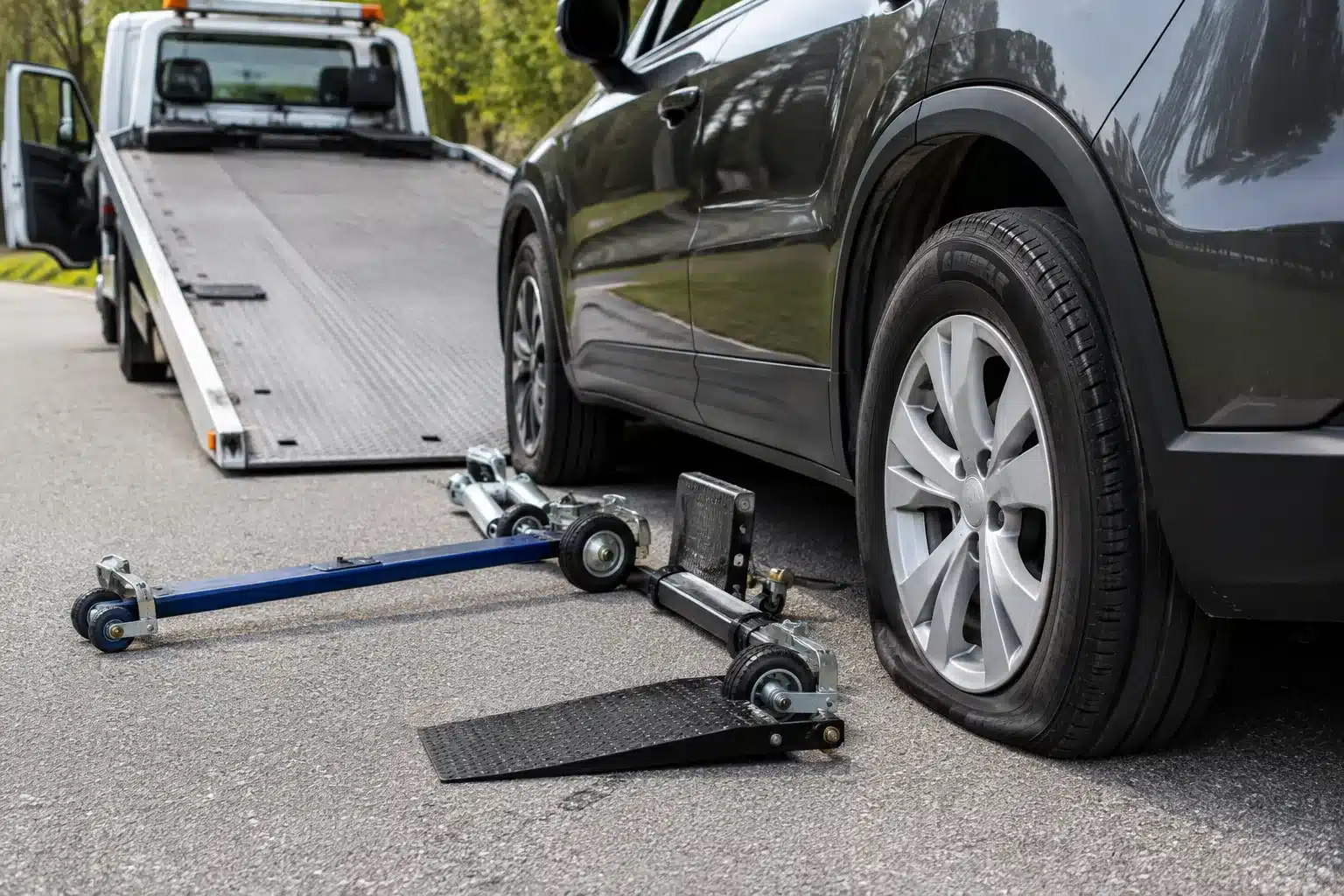
Flatbed towing is widely treated as the safest choice when a car has a flat tire, because no wheels have to roll or stay in contact with the road during transport. If wheel-lift equipment must be used instead, the operator should keep the affected wheels suspended and confirm the parking brake is released before the car is moved. When tires are too damaged to roll, tow crews often carry extra gear such as dollies to get the vehicle moving without dragging a wheel across the pavement.
This is why flat tires car removal is not a one-size-fits-all service. The same vehicle can be simple to load in one case and frustrating in another, based almost entirely on the tires and how long the car has sat. A well-maintained car with a slow leak is an easy flatbed load. A car that has been parked for months with all four tires flat can settle, rust, and resist every attempt to roll it forward.
How tire and wheel condition changes the pickup
The first question a dispatcher asks is whether the car can roll at all. Tires that are low but still round may allow the car to be pushed a few feet into position for loading. Fully deflated tires drop the body close to the ground, and the undercarriage or bumper can scrape before the car reaches the bed. In that case, the crew may need a low clearance tow truck or additional equipment to raise the vehicle safely without damaging the body panels.
Vehicle position also controls tow truck access. A car parked nose-in against a wall, backed into a carport, or squeezed between two other vehicles leaves little room for a driver to line up a flatbed. Narrow lanes, low branches, and tight underground ramps can rule out larger trucks altogether. Sharing these details supports realistic vehicle pickup planning, because the service can then recommend the right truck and confirm whether the location will work before a driver is sent.
Seized wheels and non-rolling vehicles
Some cars with four flat tires are actually nonrolling vehicle pickup cases because the wheels will not turn even after air is added. Seized brakes, a stuck parking brake, or components that have corroded during long storage can lock the vehicle solid. Seized wheels towing requires patience and the correct tooling, since forcing a locked wheel can damage the brake system or suspension.
Operators also deal with wheels that refuse to come off after the lug nuts are removed, often because the wheel has rusted to the hub. In those situations, a careful service will assess the risk instead of forcing parts and creating a larger problem. If you own a car in this condition, mention that it has not moved in a long time. That single detail tells the towing provider to expect rust, stuck hardware, and a vehicle that may need to be lifted rather than rolled.
Repair, private sale, or direct removal
For an owner deciding what to do with a car that cannot roll, the options usually come down to repairing it, selling it privately, or selling it directly to a removal service. If the car needs a full set of tires, brake work, and additional repairs just to be driven safely, the bill can quickly exceed the value of an older vehicle. A private sale also assumes the buyer can arrange their own transport, which narrows the pool of interested buyers.
That is where a scrap car removal Vancouver service becomes a practical option. Companies that buy vehicles in any condition handle non-rolling cars regularly, so four flat tires are not a barrier. The removal service coordinates the tow truck, pays the seller for the vehicle, and recycles what remains. Many services in the area also offer same day car removal when the schedule and tow truck access allow it. The seller avoids the hassle of finding a separate tow company and then still having to market the car afterward.
What to check before requesting pickup
To make the process faster and more accurate, go through this checklist before you call or submit a request:
Exact parking location. Note whether the car is in a driveway, on the street, in a parkade, or in an alley, and whether a large truck can reach it easily.
Wheel condition. Explain whether the tires are low, fully flat, or if the wheels are seized and the car will not roll.
Parking surface and slope. Mention concrete, asphalt, gravel, grass, or dirt, and note if the ground is soft or the car is parked on a hill.
Obstacles around the car. Describe fences, low branches, parked cars, narrow gates, or anything else that limits tow truck access.
Keys and brake position. Confirm whether the keys are available and whether the parking brake is engaged.
Time in place. If the car has not moved for months or years, say so. Long storage makes seized wheels and low clearance challenges more likely.
Frequently Asked Questions
Can a tow truck remove a car with four flat tires?
Yes, in most cases it can. The towing provider needs to know whether the tires still roll, how low the car sits, and whether the location allows a flatbed or wheel-lift truck to line up safely. Fully deflated tires and seized wheels change the equipment needed, but they usually do not prevent removal.
Is a flatbed safer than a wheel-lift truck for a car with flat tires?
Flatbed towing is generally preferred because none of the wheels have to roll or touch the road while the car is transported. If wheel-lift equipment is used, the operator should keep the damaged wheels suspended and confirm the parking brake is released before moving the car. This reduces the risk of damage to the tires, wheels, brakes, or drivetrain.
What details matter most when booking a pickup for a car with flat tires?
Dispatchers need accurate information about the car and the site: where it is parked, what surface it is sitting on, how close it is to walls or other vehicles, and whether the wheels turn freely or are seized. Sharing the vehicle’s real condition helps the service send the right truck and avoids a wasted trip.
Will a scrap car removal service accept a car that cannot roll?
Yes. Scrap and recycling services expect some vehicles to arrive on their own wheels and others to need full towing support. A car with four flat tires, seized brakes, or a dead drivetrain is still removable when the towing provider brings the right equipment and the location allows truck access. Ask the service directly about your vehicle’s condition for a clear answer.
Four flat tires do not mean the car is stuck in place forever, but they do mean the pickup has to be arranged around the vehicle’s true condition. The more accurate you are about the wheels, the clearance, and the access at your location, the smoother the removal will be. If you have a non-rolling vehicle in the Vancouver area, contact BC Auto Recycling with those details and request a condition-based quote before the truck is scheduled.