Yes, you can sell high mileage car for cash. A vehicle with serious kilometres on the odometer still has value, and the odometer reading is only one part of the story. The offer you receive depends on whether the car runs, its make and model, body and mechanical condition, remaining usable parts, and recyclable value. An old car with high kilometres is not automatically worthless, and there are several realistic routes to sell it, from private sale to a direct cash-for-cars purchase.
The table below compares the typical situations owners face with a high-kilometre vehicle and the most realistic sale route for each.
| Condition of the Car | Most Realistic Sale Route | Details That Affect the Offer |
| Runs well | Private sale or direct sale to a cash buyer | Maintenance records, body rust, model demand |
| Needs moderate repairs | Direct sale to a cash-for-cars buyer | Cost of repairs, availability of replacement parts |
| Has major mechanical issues | Salvage or scrap buyer | Usable components, engine and transmission condition |
| No longer runs | Scrap car removal or salvage pickup | Vehicle weight, recyclable metals, towing needs |
What Counts as High Mileage in a Selling Decision?
There is no single number that instantly makes a car unsellable. In practical terms, a car with more than 250000 km is usually treated as high mileage, and once a car passes the 300000 km mark, many private buyers start to lose interest. But that does not mean the high mileage car value disappears. Buyers look at the whole package: service history, rust, the condition of the interior, and how the car starts and drives during a test.
A 2007 model with roughly 258000 km, for example, may still attract a buyer on a limited budget, especially if the price is honest. The market for older, high-kilometre vehicles is smaller than the market for low-mileage examples, but it exists. A buyer for high mileage vehicle is usually someone who wants basic transportation at minimum upfront cost, or someone comfortable with repairs over time. Some owners have bought cars past the 200000 or 300000 mile mark and added many more miles without major failure, so demand for well-maintained examples never fully disappears.
Why Kilometres Alone Do Not Determine the Price
Odometer numbers matter, but they do not act alone. Two cars of the same year and model can have very different values at the same mileage. A rusted body, worn interior, and missed oil changes will lower offers much faster than a clean example with complete records and recent maintenance.
Mechanical condition carries serious weight too. If the engine burns oil, the transmission shifts roughly, or the suspension clunks over bumps, the car becomes a risk for the next owner. In that case, the high kilometre vehicle is often valued closer to its parts and scrap potential than to what a private driver would pay. Local demand also plays a role, and in Metro Vancouver, a running car with moderate mileage can generate interest through a private listing, while a non-running car is usually better suited to a scrap removal service.
Documentation is one of the quickest ways to protect value. A folder of oil change receipts, brake jobs, and timing belt replacements tells a buyer that the car was driven with care. On the other hand, a high-mileage car with no history and obvious neglect will usually be treated as a parts car rather than a driver.
How a 300000 km Car Can Still Hold Value
A 300000 km car is well past the point where most dealerships offer meaningful trade-in money, but it can still hold real value in the right sale channel. The car may have valuable core components. Engines, transmissions, doors, fenders, radiators, and other parts are often resold individually after dismantling, which is why some buyers prefer to take a vehicle apart rather than crush it whole.
A 300000 km car that has spent years on the highway may also have a solid chassis and a decent interior. Even when the body is rough, the catalytic converter and other metal parts carry scrap value. This is where a cash for cars Vancouver service becomes useful: the buyer assesses the entire vehicle, not just the odometer. The honest expectation is that a 300000 km car will not fetch the price of a low-mileage trade-in, but it can still produce a fair cash payment when usable parts and current scrap rates are factored in.
The age of the car also matters. A 300000 km car from a model with strong parts demand can be worth more for dismantling than a spotless but unpopular model from the same era. Buyers who resell parts know exactly which models move quickly.
Sell a High Mileage Car for Cash: Private Sale, Trade-In, or Direct Sale
The route you choose changes the final price and the amount of effort required.
Private sale
A private sale can pay the most for a clean, running high-mileage car because you are selling directly to the end user. The catch is time. You need to write a good listing, photograph the car well, answer messages, and arrange in-person viewings. Safety and paperwork are your responsibility. If the car no longer runs or has major mechanical issues, a private sale is rarely realistic.
Trade-in
Trade-in values for an old car with high kilometres are usually low. The dealer must absorb the risk of reconditioning and reselling, so the offer reflects that risk. If the goal is to simplify a new-car purchase and the trade-in amount is acceptable, this can still be a convenient option.
Direct sale to a cash buyer
A direct cash sale to a scrap car or auto recycling service is often the most practical route for a high-mileage vehicle that is damaged, rusty, or non-running. These services buy the car knowing it will be dismantled and recycled. The offer is based on the vehicle’s weight, recoverable metals, and usable parts, and towing is often included in the service.
When Spending on Repairs Makes Little Sense
Repairs can eat up the value of a high-mileage car quickly. If a mechanic quotes a large bill to fix a transmission on a vehicle that is worth only a few hundred dollars, spending that money is hard to justify. The same logic applies to major body work, rust repair, or expensive electrical diagnosis. In those situations, selling the car as-is to a cash buyer is usually the more sensible financial choice.
Small fixes can still help. A car that starts reliably, runs smoothly, and has a clean interior will always attract more interest than one that looks abandoned. Old receipts for recent work are worth saving. They give a buyer for high mileage vehicle confidence that the car was looked after, and they can support a slightly better offer.
How Buyers Evaluate a High-Mileage Vehicle
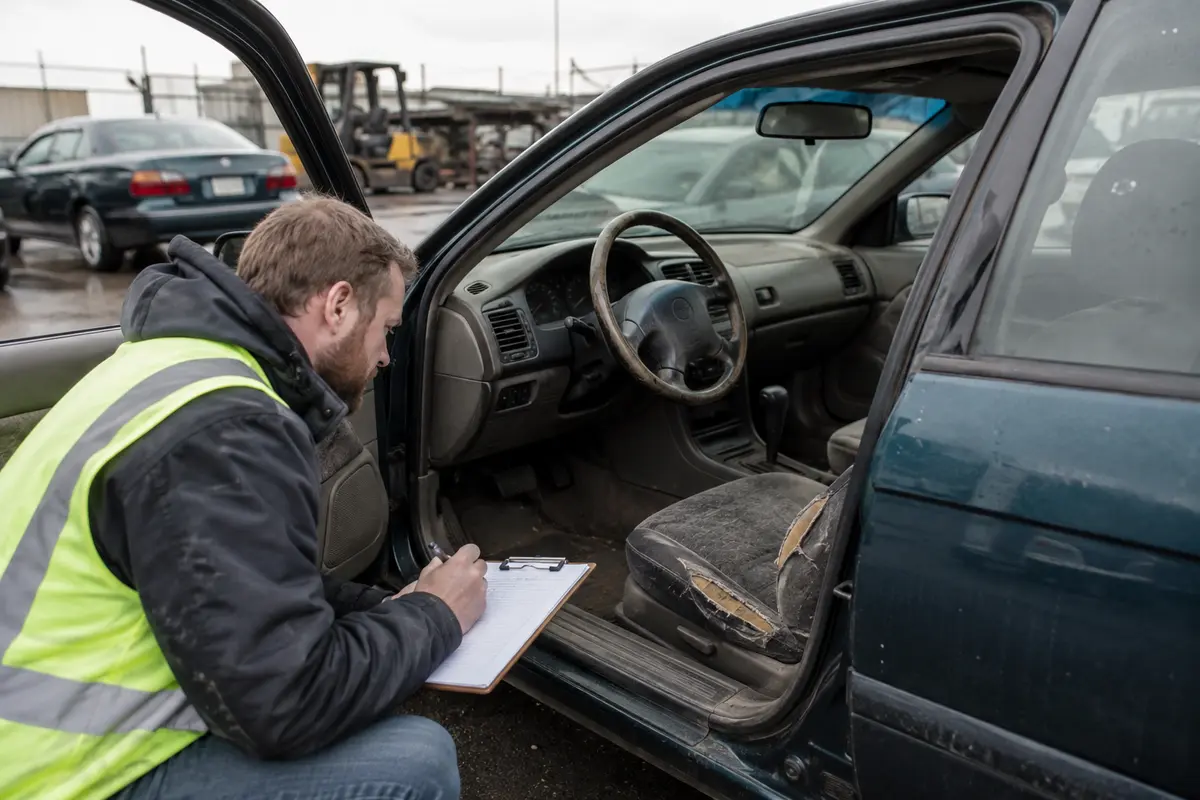
Professional buyers are not guessing when they make an offer. They check the vehicle’s overall condition, inspect the body and frame, and look for damage that affects safety and dismantling value. They also consider the demand for that model’s parts. A common vehicle with a strong used-parts market will often generate a better offer than a rare model with parts nobody needs.
Weight plays a central role in the scrap car price calculation. Scrap pricing is often quoted per ton of vehicle weight, and one Pacific Northwest buyer advertises salvage value near $170 per ton, although rates move with the metal market. Non-ferrous metals such as aluminum in wheels and copper in wiring add more value. That is why two similar cars can receive different offers even when the odometer readings are nearly identical.
You can also research your car’s value with an appraisal tool such as Black Book before you contact buyers. These tools give a market estimate, but they do not replace a hands-on inspection by a professional buyer.
What to Prepare Before Requesting a Quote
If you have decided to sell car over 250000 km, start by gathering a few details before you call. The buyer will usually ask for the year, make, model, and current odometer reading. A short description of how the car drives is helpful. Mention whether it starts, whether it shifts properly, and whether there is visible body damage or rust.
Ask for a free quote over the phone or online. If you do not have the ownership documents, ask the buyer what is acceptable before you arrange anything. When you are ready, a cash-for-cars service in Metro Vancouver can pick up the car and complete payment at the time of removal. For a closer look at how offers are built, review what goes into the scrap car price calculation. And if you are in the Lower Mainland, the cash for cars Vancouver option is designed for vehicles that are old, damaged, or simply past their useful driving life.
Frequently Asked Questions
Can I sell a car with more than 250000 km?
Yes. Many cash-for-cars and scrap removal services buy vehicles past 250000 km, including cars that no longer run. The offer changes based on the vehicle’s condition and usable parts, but the high odometer reading alone does not make the car impossible to sell. Contact a buyer directly to get a current quote for your specific situation.
Is it worth repairing a high-mileage car before selling it?
Only if the repair costs less than the value it adds. A running car with a clean interior and recent maintenance will attract more interest, but major repairs on a car worth very little are usually not recoverable. Get a repair estimate first, then compare it with an as-is cash offer before you spend any money.
Do I need a running car to get cash for it in Vancouver?
No. Vancouver-area cash-for-cars services routinely pick up non-running vehicles, including cars with dead engines, missing transmissions, or serious collision damage. Towing is often included, and the offer is based on the vehicle’s scrap value and reusable parts. A locked or undriveable car can often still be removed with the right equipment.