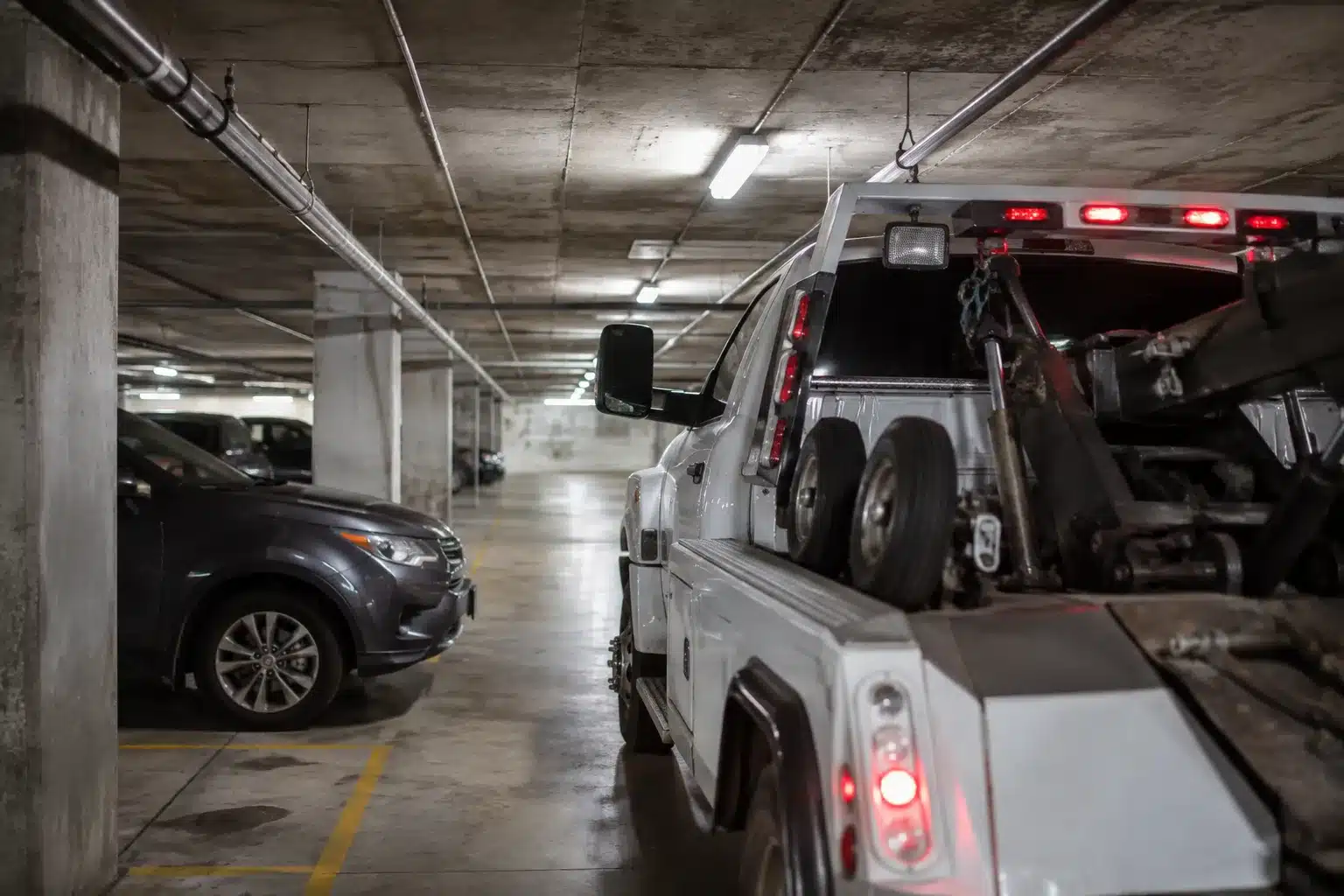
You can usually sell a car from an underground parkade, but a successful pickup depends on height clearance, building access rules, the vehicle’s position, and whether the car can move under its own power or needs specialized equipment. The selling price matters less than the answer to one practical question: how will the car physically leave the building? When you plan to sell a car from an underground parkade, treat this as a logistics exercise first and a pricing exercise second.
The table below compares common parking situations to show what changes when a removal service arrives.
Parking situation
Access information
Likely preparation
Reschedule risk
Open surface parking
Tow truck can pull up beside the car with no height restriction.
Keys, ownership documents, and a clear path to the vehicle.
Low in most cases.
Low-clearance parkade
Height limit controls which truck fits; ramps may be steep or narrow.
Measure and confirm clearance, then share those measurements before booking.
Medium to high if the wrong truck is dispatched.
Gated or access-controlled garage
Building staff must open gates; an approved access window may apply.
Notify property management and give the driver a contact person.
Medium if no attendant is available at pickup time.
Blocked or confined space
Vehicle is near columns, in a corner, or surrounded by other cars.
Move the car to an open stall if it still drives.
High if the car cannot be moved at all.
Why Low Clearance Changes the Removal Plan
A tow truck needs vertical clearance not only at the parkade entrance but also along the ramp and above the parking stall. Standard flatbed and wheel-lift trucks are tall, and a restrictive ceiling can stop them from entering at all. That is why low clearance vehicle removal is a measurement exercise rather than a guessing game.
Check the posted height at the entrance, then measure any low beams, pipes, or mechanical ducts along the route to the stall. If the vehicle is parked on a lower level, consider how much the truck tilts while loading. A car that sits very low or cannot roll may also scrape on a steep ramp transition. Sharing these numbers with the removal company before pickup lets the dispatcher assign equipment that fits your building.
How to Sell a Car From an Underground Parkade Without Delays
Good vehicle pickup planning follows a simple order. First, confirm that your ownership documents are complete and accessible, and that there are no outstanding claims that would complicate transfer. Rules for vehicle transfer documents vary by province, so check with the office that issues registration in your area if you are unsure about what is required.
Next, look at the physical position of the car. If it still runs, move it to an open, level stall near the ramp or entrance. This makes underground parking car towing far simpler because the driver does not have to reverse through tight aisles or work around columns. If the car does not run, note exactly where it sits and whether the parking brake releases.
Then contact building management to confirm that a commercial vehicle can enter and what steps are needed for gate access. Only after those details are confirmed should you book a pickup time. When documents, keys, access permission, and position are all aligned, the appointment has a much better chance of happening as scheduled.
Working With Strata Rules and Building Access
Parking stalls in a condo are usually part of common property, which means a buyer or tow operator does not have an automatic right to enter the building. Most properties have strata parking rules that require advance notice for any commercial vehicle activity, an approved time slot, and sometimes an attendant to operate the gate or elevator. Because every condo corporation is different, verify the current requirements with your property manager before booking.
Condo car removal appointments often fail when the tow truck arrives and the gate is not staffed or the driver cannot reach the stall. Ask about any insurance documentation the building requires and whether the driver must check in at a security desk. The same rules can apply to visitors, so if you plan a private sale and need to show the car, confirm that bringing a stranger into the parkade is allowed.
Some municipalities also restrict parking a vehicle on a public street or lot when the main purpose is to advertise it for sale, and others allow only licensed sellers to display cars. If you are tempted to put a for-sale sign in the window, check your local bylaws first.
Vehicle Position and Condition Decide What Equipment Is Needed
Location matters even when the car drives. A vehicle parked beside a support column, in a corner stall, or at the bottom of a ramp leaves little room for a tow truck to maneuver. Parkade tow truck access improves dramatically when the vehicle can be moved to a wider aisle or to the entrance level before pickup.
Condition matters just as much. A non-running car with seized brakes, flat tires, or a locked drivetrain cannot simply roll onto a flatbed. Forcing it may damage the car or the garage floor. If the vehicle cannot roll at all, the operator must use skids or a winch, and that extra equipment needs enough space to be set up safely. In extreme situations such as flooding, vehicles on lower levels may remain trapped until the garage is safe, which is another reason to plan removal while normal access still exists.
Be honest about the car’s condition when you book. A car that rolls freely, has a working parking brake release, and carries all its keys is straightforward to load. A car that is lowered, seized, or wedged into a tight spot requires a different plan and a more realistic timeline.
Consider Private Sale, Repair, or a Direct As-Is Sale
Before arranging any removal, think about which selling route fits the car and your building. A private sale can bring a higher price, but it means inviting buyers into a secure garage and handling test drives in a confined space. Online listings are a common starting point, and some owners of dead cars have even listed them as free vehicles to encourage fast pickup. That approach can work when the goal is simply to clear the stall.
Repair is another option if the issue is minor, such as a dead battery or flat tire, and you want to sell the car in running condition. If the car is beyond reasonable repair or has been sitting for a long time, a direct as-is sale to a scrap or recycling service is often the simplest path. The removal company assesses the vehicle based on its actual condition and the access situation, so a realistic description protects everyone.
Pre-Pickup Checklist for Condo and Apartment Owners
Work through this checklist before you confirm a pickup time:
Confirm that you have the keys and that the ownership documents are complete.
Measure the height clearance at the entrance, along the ramp, and above the stall.
Move the vehicle to an open or level space if it still drives.
Notify the property manager and confirm any required access window.
Tell the dispatcher about the car’s condition, including flat tires, leaks, or seized brakes.
Remove personal belongings and any items that could shift during loading.
If the car is parked on a ramp or in a spot that blocks other vehicles, ask whether moving it requires management approval and avoid scheduling at rush hour. A small amount of preparation reduces the chance that the driver arrives and has to leave without the car.
Once you have accurate details about the vehicle, its condition, and your building’s access, you can request a condition-based quote with confidence. For Metro Vancouver owners, a local service such as cash for cars Vancouver can explain what is possible for your parkade situation. The broader car removal Vancouver process follows the same logic: share real measurements, follow your strata rules, and let the vehicle’s condition guide the plan.
Frequently Asked Questions
Do I need strata permission to sell a car from my parkade stall?
In most condo buildings, yes. The parkade is common property, and a removal truck or buyer needs access that only the property manager or strata council can authorize. Many buildings require advance notice and an approved time slot for commercial vehicle activity. Rules are not the same everywhere, so check the current strata parking rules and confirm the process with your property manager before booking a pickup.
What happens if the parkade is too low for a standard tow truck?
The removal company may send a lower-profile truck or recommend that the car be moved to the entrance level if it still runs. Measuring the clearance at the entrance, along the ramp, and above the stall helps the dispatcher choose the right equipment. If the first truck cannot enter, the appointment will likely be rescheduled, so accurate measurements at booking time prevent that delay.
Can a non-running car be removed from a tight underground stall?
It can, but the method depends on how much room the operator has. If the wheels roll freely, the car can be winched or pushed to a wider aisle. If the brakes are seized or the car sits very low, additional equipment may be required, or the car may need to be dragged carefully. The operator will judge what is safe for both the vehicle and the garage.
Can I put a for-sale sign on my car in a public parking lot?
Not always. Some municipalities prohibit parking a vehicle on a street or public lot when the main purpose is to advertise its sale, and others allow only licensed sellers to display vehicles. On private property, you still need the lot owner’s permission. Check your local bylaws before leaving a car with a for-sale sign in any public or shared space.