A car with seized brakes can often be sold, but a locked wheel changes how it must be loaded. Before you book a pickup, tell the provider which wheels will not turn and where the car is parked. If the vehicle cannot roll, do not force it to move. A scrap car buyer can make a plan for a non-rolling vehicle, but only when the dispatch team knows what to expect.
How to identify and communicate which wheels are locked
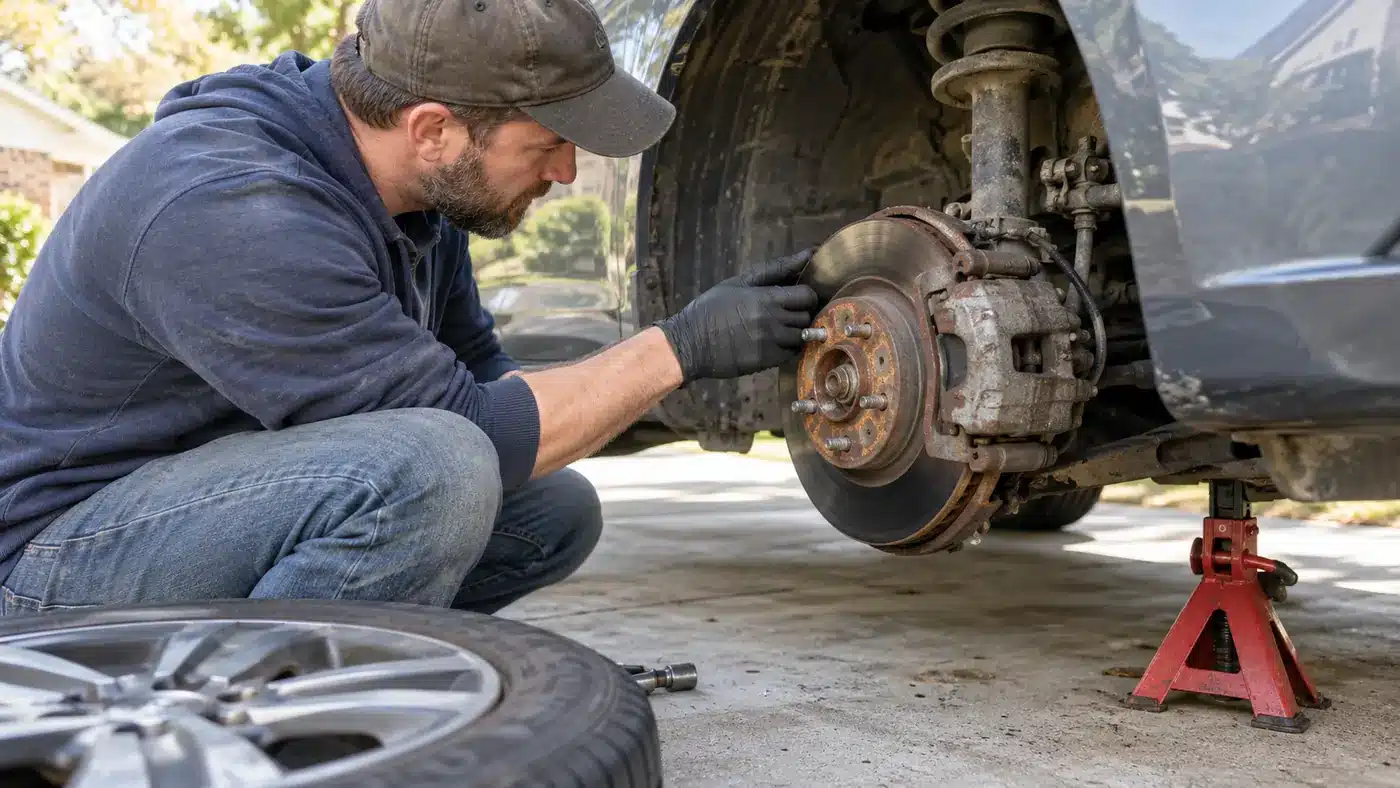
The clearest signs of a seized caliper are the car pulling to one side, a burning smell with a hot wheel, and uneven brake pad wear. Those signs can help you explain the history, but they do not always tell you which wheel is locked right now. A professional mechanic can confirm the cause with a safe inspection.
Use positions everyone understands: left front, right front, left rear, right rear. If you are not sure, say unknown rather than guessing. Tell the buyer whether the steering wheel turns, whether the car rolls in neutral, and whether the parking brake is on. These details help dispatch choose the right truck and loading method for a seized caliper vehicle.
Position, surface and clearance details for loading
Where the car sits matters as much as the brake problem. A locked wheel on a flat driveway is easier to load than the same wheel on a gravel slope or in a tight underground parkade. Give clear directions from the street and mention any gate, alley, or low overhead clearance.
Mention the surface too. Asphalt, concrete, gravel, grass, and dirt all affect how a winch or skates will work. If the car is parked beside a curb, against a wall, or under a low branch, say so. If other vehicles block the way, let dispatch know.
Why the car should not be forced to move
Driving with seized brakes is not recommended. The RAC advises contacting a garage or mobile mechanic as soon as possible. Forcing a locked wheel to turn can damage brake components and make the vehicle harder to load. Trying to drive to a scrapyard can also create a safety risk for you and other road users.
The same rule applies during pickup. Do not try to push the car out of a spot just to help the tow operator. If car wheels will not roll, a winch or wheel skates can often move the vehicle onto a flatbed without forcing the brake. The driver needs to know the wheel is locked before they arrive, not after they try to pull the car.
Repair, as-is sale, or pickup: your three options
The best way to fix seized brakes is to take the vehicle to a professional auto mechanic or car dealer and ask them to inspect and service the brakes. That is the right path if the car is otherwise reliable and you want to keep driving it. Get a written estimate before you commit.
An as-is sale to a private buyer can be slow. Buyers often discount heavily for brake problems, and a non-rolling car is harder for them to move. Scrap car removal is usually more practical when the repair cost is high or the car is not worth fixing. A scrap buyer can collect a non-running vehicle and pay cash.
BC Auto Recycling is a Vancouver-based scrap car removal service that buys unwanted, damaged, and non-running vehicles. It offers free towing, same-day pickup, and eco-friendly dismantling. If your car has seized brakes, report which wheels are locked when you book. See car removal in Vancouver for the service area and pickup process.
Checklist before you contact a buyer
Make, model, year, and the exact location where the car is parked.
Which wheels will not roll: left front, right front, left rear, right rear, or unknown.
Whether the parking brake is on and whether it releases.
Surface and slope: driveway, street, alley, lot, gravel, grass, or concrete.
Access details: narrow entrance, low clearance, gate, parked cars, or tight turn.
Known damage beyond the brakes, such as body damage or missing parts.
Photos of all four wheels, the car from each side, and the parking spot from the street.
Any constraints that could affect pickup, such as a car that must be winched or a spot with no room for a flatbed.
Photos help the buyer confirm the wheel positions and access. Take them in daylight if possible. Do not crawl under the car or jack it up to get a better angle. If you cannot take a clear photo, describe what you see in plain language.
How to prepare the car for a non-rolling pickup
Remove personal belongings and any loose items from the cabin and trunk. Have the keys, ownership, and any paperwork ready. If the parking brake is engaged, tell the buyer whether it can be released. Do not remove wheels or brake parts to try to free the car. That can make the vehicle unsafe to load.
For more general preparation steps, see this guide to scrap car pickup preparation. The key difference with seized brakes is communication. The buyer needs to know the car will not roll freely and which wheels are affected. That single detail shapes the whole pickup plan.
What to say when you call
Start with the basics: make, model, year, and location. Then explain the brake problem. Say which wheels are locked and whether the car rolls in neutral. Mention the parking surface, any slope, and whether a truck can get close. Add any known damage that affects loading.
Ask the buyer what equipment they will bring and whether they need anything before arrival. Do not agree to a pickup that assumes the car rolls if it does not. If the cause is uncertain, say so. Dispatch can plan for a tow immobile car, but only if they know the truth before the truck leaves.
Ready to sell a car with seized brakes? Report which wheels are locked before pickup. BC Auto Recycling asks for make, model, year, location, known damage, and pickup constraints where relevant. With clear information, a locked brake does not have to block the sale.
Frequently Asked Questions
Here are common questions about selling a car when the wheels will not roll.
Can I sell a car with seized brakes in Vancouver?
Yes, many Vancouver scrap car buyers accept vehicles that do not run or roll. Describe the seized brake problem before pickup. Tell the buyer which wheels are locked, where the car is parked, and whether the parking brake is engaged. BC Auto Recycling buys damaged and non-running vehicles and offers free towing for qualifying cars.
Will a tow truck take a car if the wheels will not turn?
Often, yes, but the truck may need a flatbed, winch, or wheel skates. A standard tow can be unsafe or impossible when a wheel is locked. Dispatch needs to know which wheels will not roll and whether the car can be winched onto a flatbed. Do not force the car to move before the driver arrives.
Should I drive a car with seized brakes to a scrapyard?
No. Driving with seized brakes is not recommended. The RAC advises contacting a garage or mobile mechanic as soon as possible. A locked wheel can damage brake parts and create a safety risk on the road. Arrange a pickup instead, and let the driver load the car with the right equipment.
Can I sell a car as-is if the parking brake is stuck?
Yes, an as-is sale is possible, but the stuck parking brake must be disclosed. A private buyer may struggle to move the car, so a scrap car buyer is often more practical. Tell the buyer that the rear wheels may not roll and whether the parking brake can be released. Accurate information helps the driver bring the right equipment. This is the safer approach for a stuck parking brake pickup.
Need an as-is quote? BC Auto Recycling buys cars in any condition across Metro Vancouver. Share the make, model, year, location, known damage, and pickup constraints to arrange a clear quote and collection.