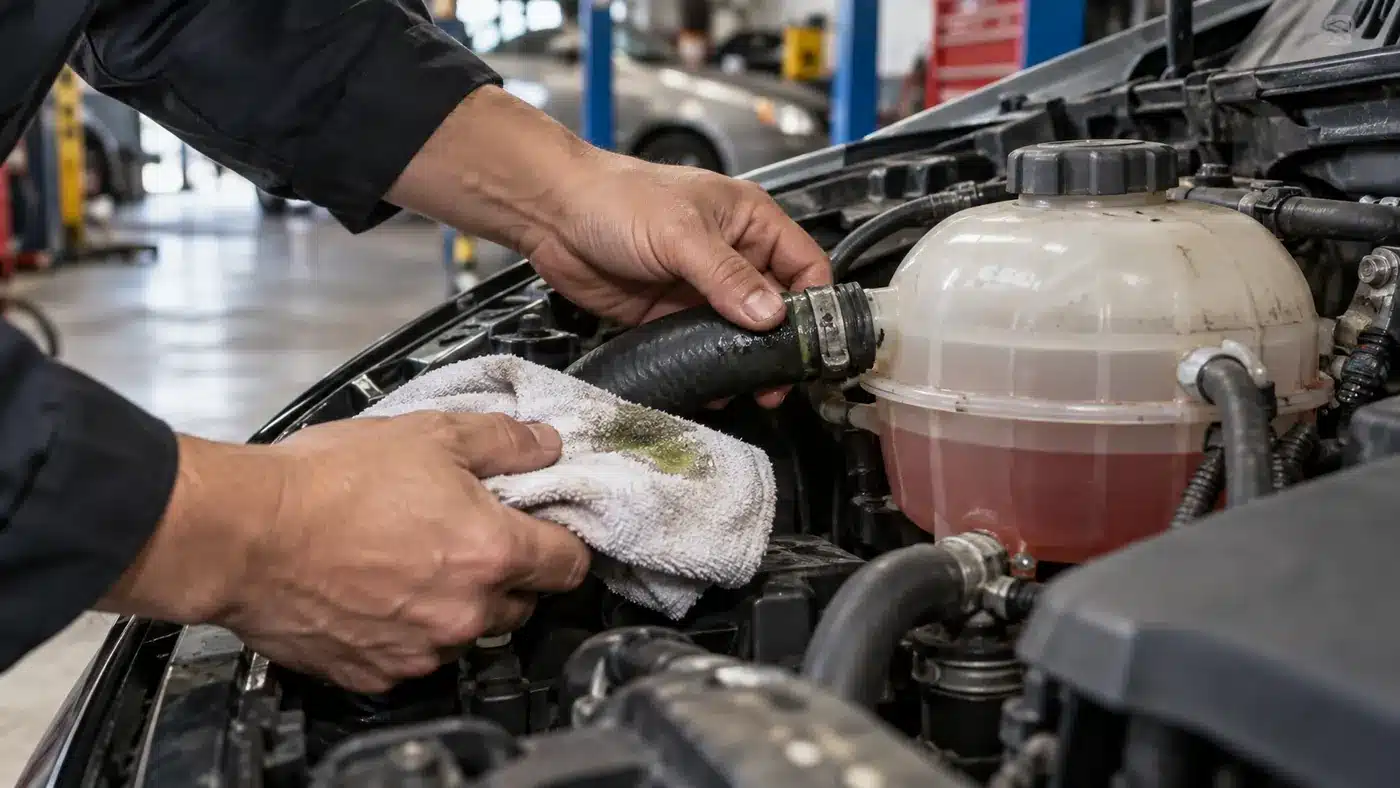
Yes, a car with a serious coolant leak can still be sold in Metro Vancouver, and plenty of buyers will take it as-is. What changes is how the car gets to the buyer. If the vehicle is overheating, steaming, or losing coolant quickly, it should not be driven. A puddle of green, orange, or pink fluid under the car, often with a sweet smell, is a clear sign something in the cooling system is not working properly, and shops warn that ignoring it can lead to major engine damage. Describe the leak honestly, then arrange transport that fits the car's actual condition.
Known Coolant Loss Is Not a Confirmed Engine Diagnosis
Most sellers reach the same point: they know fluid is disappearing, but they do not know exactly why. That gap matters when you talk to a buyer. Some coolant leaks are easy to find because you can see the puddle or smell the sweet odour. Others are much harder to trace and can take a shop some time to pin down.
What you can describe honestly is what you have actually observed. How fast does the level drop? How large does the puddle get? Has the car ever run hot? Does it drive normally when the cooling system is full? Some owners report exactly that situation, a vehicle that runs and drives well as long as coolant is topped up, with no noise and no overheating. That is useful information for anyone pricing the car, and it does not require you to name a failed part.
Avoid presenting a guess as a fact. If the cooling system has never been pressure tested or inspected, say so. A buyer who makes an offer based on a guessed diagnosis may revise that number once the car is looked at, which slows the sale down and wastes everyone's time.
What Repair Information Changes a Quote
Paperwork moves a deal faster than a verbal description. If you have anything in writing about the cooling system, bring it to the conversation, because it lets a buyer price the car with fewer unknowns.
- A shop inspection result or a written repair estimate
Receipts for cooling system parts, such as a radiator cap, hose, water pump, or radiator
Notes on how often coolant has been added and what type was used
- Whether the system was topped up with the correct coolant
- Any overheating event and when it happened
Advice from a shop is not always clear-cut. One repair shop stated as policy that it does not recommend driving cars that are leaking coolant, yet also told the owner that if the system was topped off it should be okay. If you received that kind of mixed message, pass it along as it was given rather than turning it into a promise about the car's condition.
A recent purchase can complicate things further. Coolant leaks sometimes show up within days of buying a used vehicle, and a dealership may collect the car to inspect it rather than ask the owner to drive it in. If that is where you are, get the inspection result in writing before deciding between a repair and an as-is sale.
Safe Collection When the Car Cannot Be Driven
Towing is the practical answer once a car cannot hold coolant or has already overheated. Do not plan to meet a buyer halfway, and do not ask a friend to follow you in case something goes wrong. Both of those plans put the engine at risk and can leave you stranded with a vehicle that will not move.
Before the truck arrives, park so the tow vehicle can reach you, clear out personal belongings, and have the keys ready. Tell the driver what you have seen so they can plan the load, including where the fluid appears and how much has been lost. Do not start the car to shuffle it around the block for a better angle, especially if the level is low.
If repairing the car is not worth it, car removal in Vancouver handles the towing and the paperwork in one step. BC Auto Recycling picks up vehicles in any condition across Metro Vancouver and pays on the spot, which removes the need to find a buyer who will drive out with a trailer. If the car has stopped starting altogether, the process is covered in this guide to selling a non-running car.
Repair First or Sell As-Is?
The honest answer is that you cannot compare the two options until the cooling system has been inspected. You will not know the repair cost, or whether the leak is the only issue, until someone looks at the car. Paying for a diagnosis is usually the cheapest way to get that information, and it gives you a real number to weigh against whatever an as-is buyer offers.
An as-is sale makes more sense when the estimate lands higher than the car is worth to you, when the leak keeps returning after top-ups, or when the car has already overheated. It also makes sense when you want the vehicle gone quickly and do not want to manage a repair, a re-test, and a second round of buyer questions.
Checklist Before You Contact a Buyer
Have these details ready before you call or send a message. It shortens the conversation and gets you a firmer offer.
- Condition: how fast the car loses coolant, how large the puddle gets, and whether it has overheated
- Vehicle details: make, model, and year
- Driveability: whether it starts, rolls, and steers well enough to be loaded
- Location: the city, the type of parking spot, and where the car is sitting right now
- Accessibility: parkade height limits, gates, visitor rules, or a tight lane a truck cannot enter
- Photos: the puddle, the coolant reservoir, the dashboard, and all four sides of the car
- Paperwork: any estimate, inspection note, or recent parts receipt you already have
Those seven items cover what most buyers ask about first. If a truck cannot reach the car where it sits, mention that early rather than after a driver has been dispatched.
Arrange Pickup for a Car That Should Not Be Driven
You do not need to fix a coolant leak before selling, and you do not need to risk the engine to move the car. Describe the leak, note the car's condition, and let the pickup be planned around it. Give the buyer the make, model, year, your location, any known damage, and any access limits such as a low parkade or a gated lot. From there, the right next step is usually a tow rather than a key handover and a drive away.
Frequently Asked Questions
Can I sell a car that is leaking coolant?
Yes. Buyers purchase vehicles with active cooling system leaks regularly, including ones that cannot be driven. What they need is an accurate description of how much coolant is lost, where the fluid appears, and whether the car has ever overheated. From there, they can arrange towing instead of expecting to drive the vehicle home.
Should I top up the coolant before a buyer sees the car?
Topping up with the correct coolant can make it easier to move the car a short distance, but it does not fix a leak and it does not change what you should disclose. If you add coolant, use the type the vehicle calls for, and tell the buyer you did it. Do not present a fresh top-up as a repair.
Can a car leaking coolant be towed?
Yes, towing is the standard solution for a vehicle that cannot hold coolant or has overheated. Tell the driver what you have noticed so the load can be planned properly. Avoid starting the car to reposition it, especially when the level is low, because that is where extra engine damage tends to happen.
Do I have to tell a buyer about a coolant leak?
Disclose what you know. It protects you from a dispute later and lets the buyer price the car correctly, which keeps the sale straightforward. Stick to observed facts, such as how often you refill the system and whether the car has run hot, rather than naming a part you have not had inspected.
Is a coolant leak the same as an oil leak?
No, they are different systems and different problems. This article deals with cooling system fluid loss only. The puddle gives you a clue either way, since coolant is typically green, orange, or pink and has a sweet smell, while engine oil looks and smells different. If you are unsure which fluid is escaping, have it checked before you sell.
Need an as-is quote? BC Auto Recycling buys cars in any condition across Metro Vancouver. Share the make, model, year, location, known damage, and pickup constraints to arrange a clear quote and collection.