
You can usually sell a hail-damaged car as-is, and for plenty of owners that is the smarter move, especially when a repair quote lands close to or above what the car would be worth once fixed. The real decision point is what the hail actually broke. Dents in panels with intact paint are a value problem. Broken glass, water that reached the cabin, or damage that stops a door, window or wiper from working is a safety problem, and those two situations lead to different buyers and different prices.
Cosmetic hail damage versus functional damage
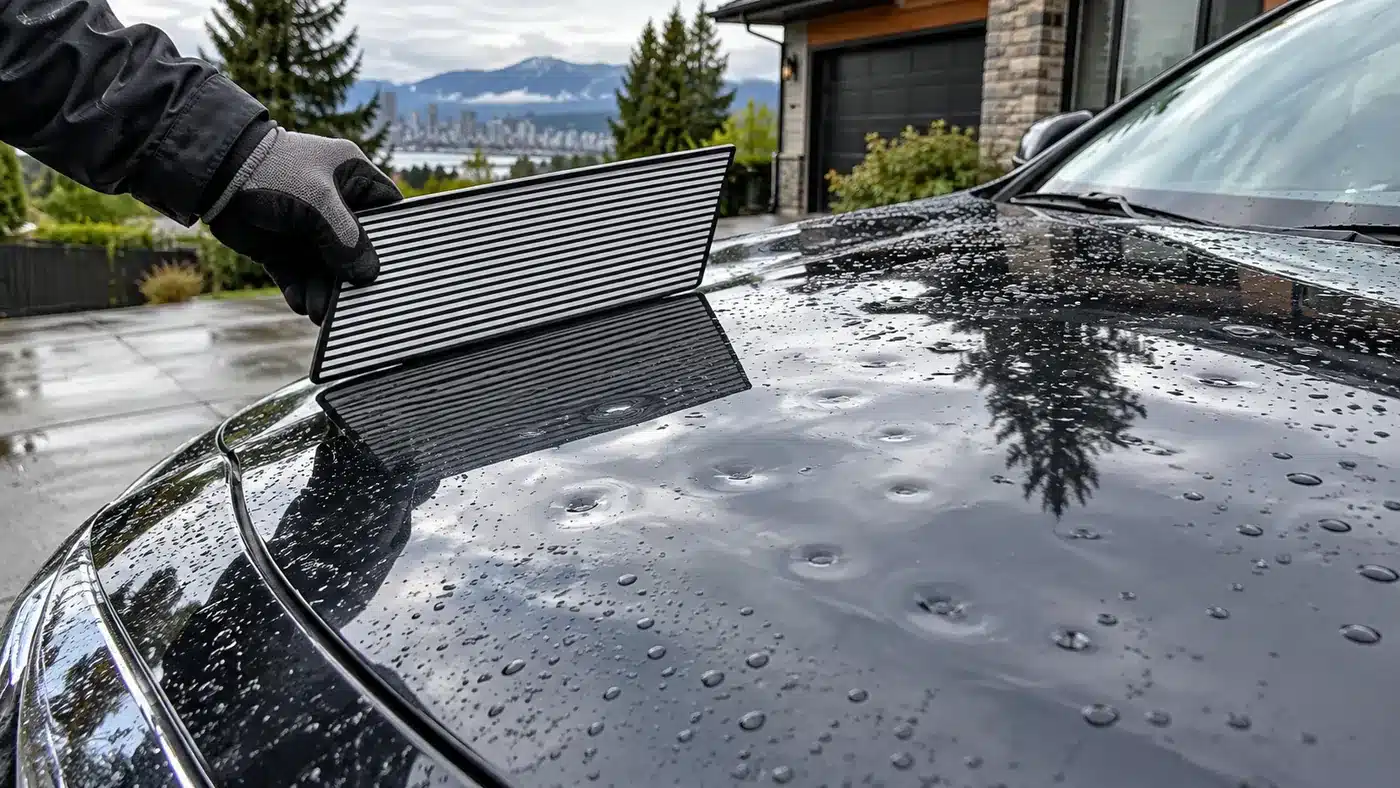
Cosmetic damage covers dents where the paint survived: the roof, hood, trunk lid and upper body panels take the worst of a storm because they face the sky. Functional damage is everything else. A cracked windshield, shattered rear glass, a dent that traps a door shut, or water sitting in the footwells after a window broke all sit in a different category, and a buyer will price them differently.
Paintless dent repair is the usual fix for the cosmetic version, but it is not always available. A dealership write-up on hail sales noted that in the majority of cases, a dealer sells a hail-damaged car without repairing it because paintless repair is not an option. That is a useful signal for owners. If the paint is cracked, stretched or sitting on a crease, lifting the dent may require refinishing the whole panel, and refinishing means body shop hours and paint matching.
Why glass damage changes the conversation
A cracked windshield is not a cosmetic issue. If the crack sits in the driver's line of sight or keeps spreading, the vehicle may not pass a provincial safety inspection, and you cannot present it as a road-ready car without mentioning that. Buyers who purchase vehicles for repair, parts or recycling account for glass damage separately from panel dents, so put it in your photos and your description rather than letting someone discover it in person.
Water intrusion is the hardest problem to price
When hail breaks a window and rain follows, the issue stops being about sheet metal. Damp carpet, a stained headliner and moisture near wiring are details a buyer needs to see, because they affect what can be salvaged from the vehicle. Be direct about it. A buyer who knows about water damage up front can still make an offer, while a buyer who finds it later will walk away or drop the number.
Repair estimate versus an as-is offer
Two numbers settle most of these decisions. The first is a written repair estimate from a shop that has actually looked at the panels. The second is what a buyer will pay for the car in its current condition. Getting the damage professionally evaluated is a common first step for owners who are unsure, because it replaces guesswork with a figure you can compare.
When repairing tends to make sense
Repair is often the better call on a newer vehicle with low mileage and limited damage, particularly if you carry comprehensive coverage and your deductible is manageable. Ask your insurer whether hail is covered under your policy before you assume either way, since coverage terms vary. If the dents are shallow, the paint is intact and paintless repair applies, the car may come out of the shop with most of its value restored.
When an as-is sale tends to make sense
An as-is sale usually wins on an older or high-mileage car, on any vehicle where the quote is close to the car's value, and on anything with broken glass or water inside. Owners in online discussions report that a hail brand can cut a car's value by roughly half, which is an anecdote rather than a rule, but the direction holds: the more panels involved, the smaller your pool of private buyers. One forum suggestion for private listings is to price below clean market value, so a car with a real market value of $9,000 might be listed at $8,000, or $7,000 if the cosmetic hit is heavy. Treat that as a starting point and adjust for your own vehicle.
There is a real market for hail-damaged vehicles
Hail cars are traded constantly. Salvage auction listings for hail damage run into the thousands, with a mix of clean titles, salvage titles and a smaller number of non-repairable units. Some dealers advertise inventories of hundreds of vehicles with light to moderate hail damage at a discount. That volume should tell you something reassuring: buyers exist at every level, and a dented roof does not make a car unsellable.
What those buyers do with the car
Buyers of hail-damaged vehicles tend to repair and resell, use the car for parts, or dismantle it so usable components can go back into the market. A dismantler can recover value from doors, glass, engines and interior parts, which is one reason an as-is offer can beat a low private-sale offer. It also means your car does not need to be pretty, running perfectly, or even driveable to have value. If you want to compare routes, see what a damaged vehicle buyer pays and how that stacks up against a private listing.
Photos that help a buyer assess panels and glass
Good photos do most of the selling when a car has storm damage. Shoot in daylight, skip the filters, and include more angles than you think you need.
Four corner shots of the whole car, taken from a few steps back.
A direct overhead shot of the roof, which is where hail hits hardest.
Close-ups of the hood, trunk lid, and each fender and door.
The windshield photographed from outside and from the driver's seat.
Any broken or chipped side and rear glass, plus the surround.
The interior, including carpet and headliner, if water got in.
The odometer and the VIN plate, so the buyer can confirm the vehicle.
Checklist before you contact a buyer
Sort these four things out first and the quote process moves quickly.
Condition: list which panels are dented, whether glass is cracked or broken, whether water entered the cabin, and whether the car starts, drives and rolls.
Location: the city or neighbourhood where the car is parked, plus whether it is registered in your name and free of liens.
Accessibility: note a parkade, back alley, tight driveway, locked gate or low clearance, since these affect how a tow truck reaches the vehicle.
Photos and details: have your images ready along with make, model, year and any known damage history.
Getting a quote and arranging pickup
Once you have photos and the basics, request a quote and be specific about the damage. Send make, model and year, your location, what you know about the hail damage, and any pickup constraints that matter. Metro Vancouver owners have an added advantage here: a local service can collect a damaged vehicle even if it no longer drives, so you are not stuck paying for a tow on top of everything else. You can also explore cash for cars options if you want to compare an outright purchase against a repair.
The practical takeaway is simple. Get one repair estimate so you know the real number, photograph every dented panel and every piece of broken glass, then compare that estimate against an as-is offer. If the glass is broken or water got inside, lean toward selling as-is and disclosing it. If the dents are shallow and the paint is intact, repairing may still pay. Either way, you will have made the call with numbers in front of you instead of guesswork.
Frequently Asked Questions
Can you sell a hail-damaged car without repairing it?
Yes. Most hail damage is cosmetic, and buyers who purchase damaged or unwanted vehicles deal with panel dents, broken glass and unrepaired bodywork regularly. You will usually receive less than you would for an identical car with a clean body, but you skip the repair bill, the shop time and the risk that the finished repair costs more than the car gains in value.
Is hail damage cosmetic or structural?
It depends on what the hail hit. Dents to the roof, hood and trunk lid with intact paint are cosmetic. Cracked glass, water that reached the cabin, or a dent that stops a door or window from working crosses into functional territory. Buyers price those problems separately, so describe them separately rather than calling everything a few dents.
Should I get a repair estimate before selling?
Yes, if you are unsure. A written estimate turns a vague worry into a figure you can compare against an as-is offer. Ask the shop whether paintless dent repair applies to your panels, since that answer often decides whether repairing makes financial sense. Keep the estimate on hand, because it also helps a buyer understand the car's condition.
What information does a buyer need for a hail damage quote?
Send the make, model and year, your location, what you know about the damage, and any pickup constraints such as a parkade, alley or locked gate. Clear daylight photos of the roof, each panel and the glass let a buyer assess the car without an in-person inspection. Accurate details mean fewer surprises at pickup.
How quickly can a hail-damaged car be picked up?
Timing depends on the buyer and where the car sits. A local service that handles damaged vehicles typically arranges towing, and coverage across Metro Vancouver means the car does not need to be driveable. Ask about availability when you request your quote, and mention any access limits so the tow truck can reach the vehicle.
Need an as-is quote? BC Auto Recycling buys cars in any condition across Metro Vancouver. Share the make, model, year, location, known damage, and pickup constraints to arrange a clear quote and collection.