
A car with a mouldy interior can usually still be sold, as long as the seller is upfront about the cabin condition and any known source of moisture. That gives a buyer enough information to judge how safe the vehicle is to sit in, how much work the interior needs, and what the car is genuinely worth to them.
What decides the outcome is rarely the smell on its own. It is how much of the cabin is affected and whether anyone has identified where the water is getting in. A damp patch under one seat and a fully contaminated cabin are two different sales, and buyers price them very differently.
Treat that table as a starting point rather than a diagnosis. Buyers price the worst plausible version of what they can see and smell, so an honest description tends to produce a more useful number than hoping the odour goes unnoticed on viewing day.
What Mould in a Car Does to Resale Value
Interior contamination hits value in two stages. The first is the immediate reaction. Published guidance on trade-ins suggests dealers may deduct $500 to $2,000 or more from an offer when mould is present or merely suspected, and private buyers often stop responding rather than negotiate.
The second stage is the risk of recurrence. One owner who documented a badly mould-damaged interior checked the car months after cleaning it to see whether growth had returned. Buyers who know that pattern price the vehicle as though it will happen again, which is why honest disclosure does not always produce a high offer.
That does not make the car worthless. Cabin damage is a contained problem. The engine, transmission, catalytic converter, doors, glass, and wheels sit outside the moisture issue entirely, which is why dismantling-oriented buyers can still put real money on a vehicle whose seats and carpet are unusable.
Documenting the Cabin Condition and Odour
Before contacting anyone, build a plain record of what the interior is actually like. This protects you in a negotiation and gives the buyer something concrete to quote against.
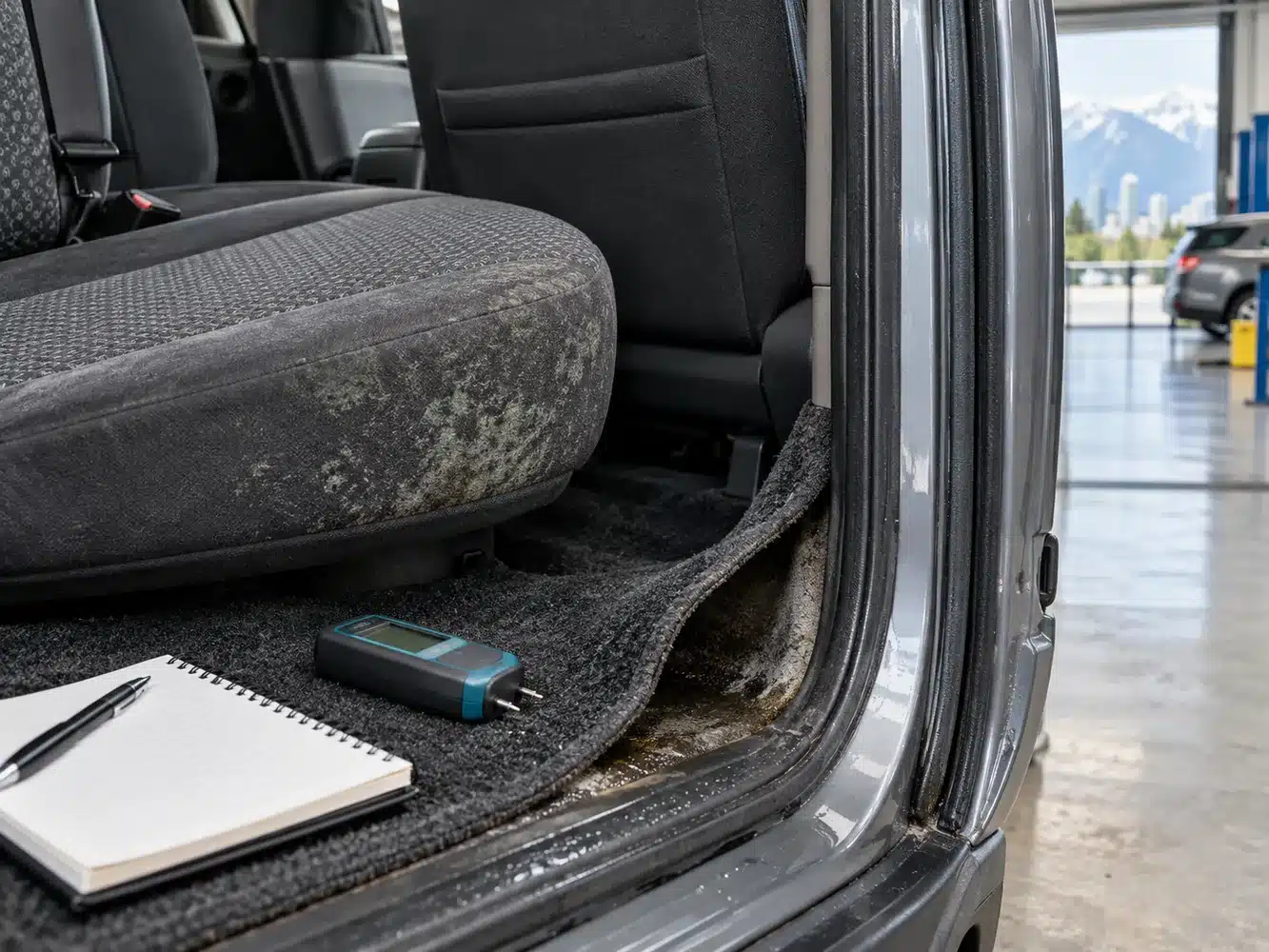
- Photograph affected areas in daylight with the doors open: front footwells, under the seats, rear bench, seatbelts, headliner edges, and trunk floor.
- Note where the smell is strongest and how strong it is with the windows closed.
- Write down roughly how long the condition has been present.
- Record whether you have vacuumed, treated, or aired out the cabin, and whether the smell returned afterwards.
- Skip the air freshener before a viewing. Masking reads as concealment and does not survive a test sit.
Owner forums carry plenty of home treatments. Common suggestions include vacuuming first, spraying white vinegar and letting it dry, then vacuuming again, on the reasoning that vinegar kills mould and evaporates without leaving its own smell. Older threads mention bleach, though bleach can damage the materials you are trying to save. Mould abatement generally means killing existing growth and spores rather than wiping a surface, and no home method guarantees the problem stays gone. The step that matters most is finding the water, because cleaning a carpet that keeps getting wet simply resets the clock.
Known Moisture Source Versus an Unknown Leak
Buyers treat these two situations completely differently, and the gap between them is usually worth more than any cleaning effort.
A known source is something you can point to: a failed window seal, a blocked sunroof drain, a leaking trunk seal, or a large spill that soaked into the padding and never dried. Once the source is identified and addressed, a buyer can evaluate the interior as a repair job with a visible end.
An unknown source is worse. If nobody can say where the water came from, the buyer has to assume the leak is still active and the cabin will get wet again, which pushes the vehicle toward parts value. If you have not found the source, say so directly instead of guessing, because a guess that turns out wrong can undo the whole deal.
Can You Sell a Car with a Moldy Interior as an As-Is Vehicle?
Yes. As-is sales are the normal route for vehicles where the interior is the main problem. Buyers in this market, including damaged vehicle buyers, expect contamination and price it in from the start, so an honest description does not kill the deal the way it might with a retail buyer.
Disclosure is the part that carries legal weight. Selling advice published for this exact situation notes that sellers must disclose known defects to avoid legal claims, and that failing to tell a buyer about mould can lead to a dispute after the sale. A short written summary of the cabin condition, sent before the vehicle changes hands, is the simplest way to keep that on the record.
It also helps to separate the interior from the rest of the car when you describe it. A recycler is assessing resaleable parts, and a contaminated cabin does not affect the engine, transmission, converter, doors, glass, or wheels. Saying clearly that the mechanical side is sound and the cabin is the problem gives a buyer a reason to look past the smell.
What an As-Is Buyer Needs to Quote the Vehicle
A short, accurate message gets a faster and firmer number than a long story. Buyers who handle contaminated vehicles generally want the following.
- Make, model, and year.
- Where the vehicle is located right now.
- Whether it starts, runs, and drives, or will need to be towed.
- A plain cabin description: odour only, or visible growth, and which surfaces are involved.
- Any other known damage, mechanical or cosmetic.
- Whether the moisture source is known, suspected, or unknown.
- Pickup constraints such as underground parking, a narrow lane, or street time limits.
- Photos of the interior plus a few of the exterior.
Access is the item sellers leave out most often, and it changes a quote more than anything else. A car sitting in an open driveway is a different job from one parked in a structure with a height restriction.
Checklist Before You Contact a Buyer
- Describe the cabin condition in one or two honest sentences.
- Have photos ready, including close-ups of any visible growth and wide shots showing how far it spreads.
- Confirm the exact location and how a truck would reach it.
- Note pickup constraints before the buyer asks.
- State what you know about the moisture source and what you do not.
- Mention any other damage so it is not a surprise on arrival.
Once that information is ready, the conversation is short. Describe the cabin condition before pickup, then give make, model, year, location, known damage, and any pickup constraints. A service that buys vehicles in any condition, such as cash for cars in Vancouver, can work from that description and confirm a collection time whether the car runs or not.
Mould in the cabin narrows your buyer pool, but it does not close the sale. What it changes is who you sell to and how much detail you provide. Sellers who document the damage, name the moisture problem honestly, and hand over clear photos usually get a workable offer without the months of failed listings that come from hoping nobody notices the smell.
Frequently Asked Questions
Can I sell a car if I have already cleaned the mould?
Yes, and cleaning helps the vehicle show better, but the history still belongs in the description. Mould has been reported returning months after a thorough interior clean, so a buyer who knows about the past problem can factor that risk in. Disclosing a cleaned interior is far safer than letting someone discover the smell later.
Does a mouldy interior reduce the value of the whole car?
It reduces cabin-related value rather than the value of the entire vehicle. Reported trade-in deductions for mould run from $500 to $2,000 or more, and private buyers may walk away completely. Mechanical parts, body panels, glass, and wheels are untouched by interior moisture, which is why dismantling-oriented buyers can still pay for the car.
Should I try to remove the mould before selling?
Finding the moisture source matters more than any surface treatment. Forum advice often suggests vacuuming, applying white vinegar, letting it dry, then vacuuming again, since vinegar evaporates without leaving a smell. Bleach appears in older threads but can damage interior materials. Treat cleaning as presentation rather than a guaranteed fix, and describe the result honestly.
What if I do not know where the water came from?
Say exactly that. An unidentified leak tells a buyer the cabin may get wet again, so the vehicle gets priced closer to parts value. Guessing at a cause you have not verified is worse, because if the guess is wrong the deal can collapse once the car is inspected. Uncertainty is acceptable, misrepresentation is not.