Yes, you may be able to help sell a car for a family member BC, but a family relationship alone does not give you the authority to complete the sale. In British Columbia, the registered owner is the person ICBC recognizes as the legal owner of the vehicle, and that person may need to sign the transfer paperwork or provide valid legal documentation before a buyer can accept the car. The correct route depends entirely on ownership and authority.
| Situation | What is typically needed | Official source to confirm |
| Owner is available and can sign | The registered owner completes the vehicle transfer forms | ICBC |
| Owner is temporarily unavailable | A valid power of attorney or another legally recognized arrangement | ICBC or a legal representative |
| Power of attorney already exists | The appointed agent presents the legal document when selling | ICBC or a legal representative |
| Owner has passed away | Estate documents, executor authority, or administrator approval | A legal representative or estate administrator |
The table above is a starting point, not a legal guarantee. Each situation can look different depending on the vehicle, the family relationship, and the paperwork available.
Why Ownership and Authority Matter in a Vehicle Sale
Every used vehicle sale in British Columbia depends on a clean transfer of ownership. The Motor Vehicle Act requires the buyer, called the transferee, to register the vehicle with ICBC within 10 days of purchase, along with payment of prescribed fees and taxes on the sale. For that transfer to happen, the seller must be the registered owner or must hold legal authority to act on the owner’s behalf.
ICBC itself advises sellers to confirm they are the registered owner before starting the process. When the vehicle is properly registered and the seller can provide the signed registration paperwork, the sale can move forward smoothly. When the seller is a family member rather than the owner, the paperwork is no longer straightforward.
Helping When the Registered Owner Can Participate
The simplest way to sell a parent’s car, a spouse’s car, or an adult child’s car is to have the registered owner handle the signing. The owner signs the insurance and registration portions of the vehicle documents, and the buyer takes those documents to an Autoplan broker to complete the transfer. This is a registered owner vehicle sale in its most direct form.
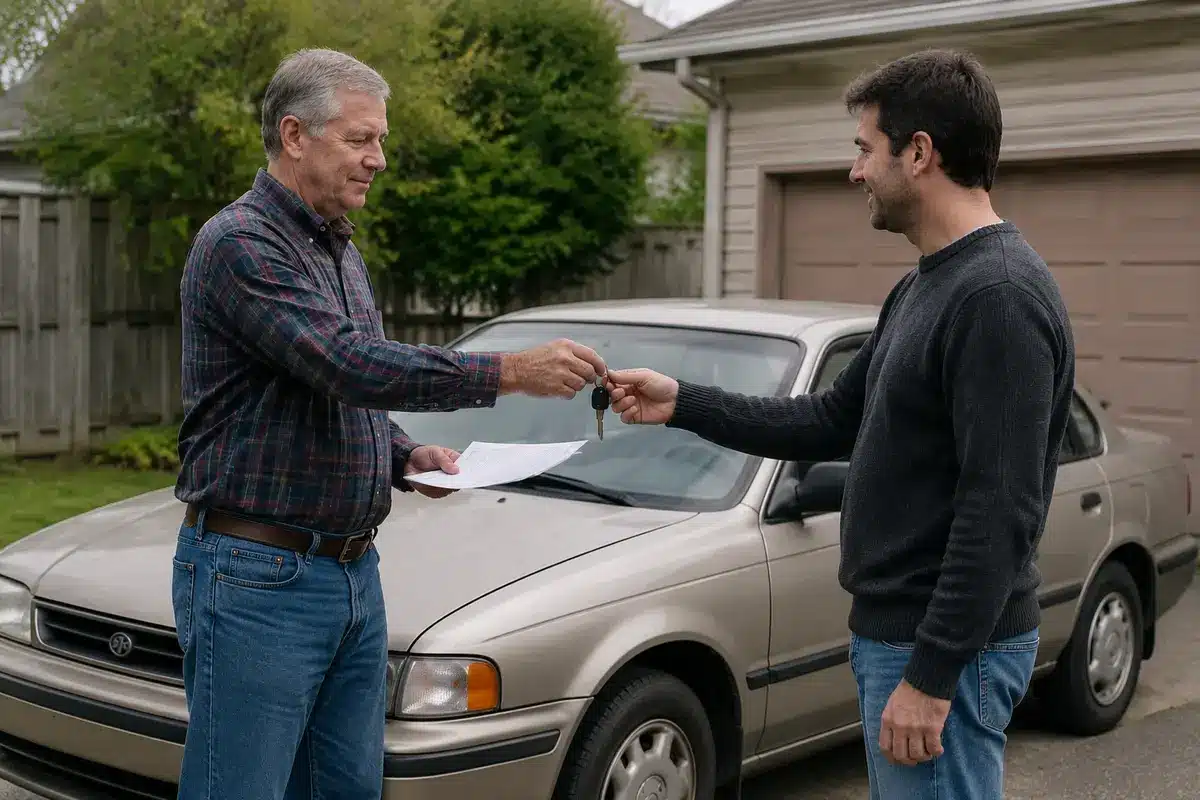
You can still be heavily involved. You can handle the advertising, take photos, answer calls, show the car to buyers, and negotiate the price. What you should not do is sign the ownership documents in place of the owner. Keep the owner involved in the final step so the transfer stays valid.
Helping an Owner Who Is Temporarily Unavailable
There are many reasons a vehicle owner may be unavailable. Your relative may be travelling outside Canada, staying in the hospital, or serving with the military. In these situations, you cannot simply assume that being family gives you the right to sell the car. A vehicle owner unavailable situation requires proof of authority.
A power of attorney may solve the problem. A power of attorney is a legal document that permits a designated agent to act on behalf of the owner. If the owner has already granted this authority, you may be able to complete the sale as their representative. However, you should confirm with ICBC which power of attorney documents are accepted for vehicle transfers before you commit to a buyer.
Why Informal Family Permission May Not Be Enough
A verbal agreement or a casual text message from your father saying “go ahead and sell it” is not the same as legal authority. Informal permission to sell a family car may be enough within the family, but it carries no weight with ICBC or with a licensed buyer. Many dealerships and scrap car services will refuse to complete an authorized vehicle sale without seeing the registered owner or proper documentation.
This is not a matter of trust. It is a protection for everyone involved. If someone without authority signs over a car that does not belong to them, the true owner could later dispute the sale, and the buyer could be left with a vehicle they cannot register.
Power of Attorney or Representative Situations to Verify
If you are acting under a power of attorney vehicle BC arrangement, you must understand that the document grants specific authority. That authority is not unlimited. Some power of attorney documents are limited to certain transactions, and ICBC may ask to see the original document or a certified copy before accepting any transfer paperwork.
Because requirements can change, always verify the current process with ICBC or with the legal representative who prepared the power of attorney. This is not a step to skip. A buyer will not be able to register the vehicle if the seller’s authority is not recognized.
Selling a Vehicle After a Family Member Has Passed Away
When a relative has died, the sale of their car becomes an estate matter. The executor named in the will, or the administrator appointed by the court, is the person who holds authority to deal with the deceased person’s property, including their vehicle. You cannot sell the car simply because you are the closest relative.
An estate sale often requires additional documents. The executor may need to produce a copy of the will, grant of probate, or letters of administration before a buyer or scrap service will accept the vehicle. The registered owner may still be listed as the deceased person, so the paperwork must show that the estate is now entitled to dispose of it. Because estate rules are detailed, it is wise to speak with a legal representative before making any promises to a buyer.
Documents and Vehicle Details a Buyer May Request
Regardless of who is selling the vehicle, the buyer will need certain paperwork to complete ownership transfer in British Columbia. At a minimum, you should expect to provide the insurance and registration portions of the vehicle documents. The seller must also be able to confirm exactly which vehicle is being sold and that no outstanding issues block the transfer.
If the vehicle is being scrapped rather than sold to a private buyer, the same ownership rules apply. A scrap car removal service needs to see the same kind of documentation before it can tow the car away. In Vancouver and the surrounding area, a responsible buyer will walk you through their specific document requirements over the phone before scheduling pickup.
If you are handling this task for a family member and the car is no longer running, you can check the documents to scrap a car in BC page to understand what paperwork is expected. Once you have confirmed your authority to act, you can also reach the car removal contact team to discuss pickup, towing, and payment details.
Confirm Your Right to Sell a Car for a Family Member BC
If you want to sell car for family member BC, start by asking one question: what authority do I have? If the registered owner can sign, keep them involved in the transfer. If the owner cannot sign, obtain the proper legal documents first. If the owner has died, work through the estate and its representatives. Never sign ownership documents without clear legal backing, and never present a family relationship as a substitute for authority.
Buyers, dealerships, and scrap services all need confidence that the seller has the right to transfer the vehicle. Taking the time to verify your position before you commit will protect you, your family member, and the person buying the car.
Frequently Asked Questions
Can I sell my parent’s car in BC without them being present?
You may be able to complete a sell parents car BC transaction if you hold a valid power of attorney or another legally recognized document giving you authority to act. Verbal permission is not enough. Confirm with ICBC that your document will be accepted before you agree to sell the vehicle.
Does a power of attorney allow me to transfer a vehicle in BC?
A power of attorney can allow you to act as the owner’s representative, but only if the document covers that type of transaction. ICBC may require the original document or a certified copy. Verify with ICBC and with the legal representative who prepared the power of attorney vehicle BC paperwork before signing anything.
What do I need to sell a car that belongs to a family member?
You need proof that you have authority to act. This could be the registered owner’s signed registration documents, a valid power of attorney, or estate documents such as probate or letters of administration. The buyer also needs the insurance and registration portions of the vehicle documents to complete the transfer.
Can a scrap car company remove a car if the owner is unavailable?
A scrap car company needs the same ownership authority as any other buyer. If you can show that you are the registered owner, have a power of attorney, or hold estate authority, removal can usually be arranged. Call the car removal contact line to confirm what documents are required before scheduling pickup.