Yes, in many cases you can sell a car after an accident. The value you receive depends on several factors: how severe the damage is, whether the vehicle is still drivable, what parts can be reused or recycled, current scrap metal prices, your insurance status, whether the title is clean or salvaged, your location, and how the buyer picks up the car. Selling after a collision is often a practical option, especially when repair costs start to climb or the insurance company declares the vehicle a total loss. Below is a quick overview of common post-accident situations and what to expect.
| Post-Accident Situation | Can You Still Sell? | What Affects Value | What to Prepare |
| Drivable with minor damage | Yes | Repair costs vs. market value, cosmetic damage | Title, photos of damage, repair estimate |
| Non-drivable or severe damage | Yes | Scrap metal weight, reusable parts, salvage title | Title, towing arrangement, photos |
| Total loss (insurance declares) | Yes | Salvage title, condition of remaining parts | Title, insurance settlement details, photos |
| Fire, flood, or hail damage | Yes | Condition of engine, chassis, interior | Title, disclosure of damage, photos |
| Non-running or blown engine | Yes | Engine block, catalytic converter, other sellable parts | Title, location for pickup |
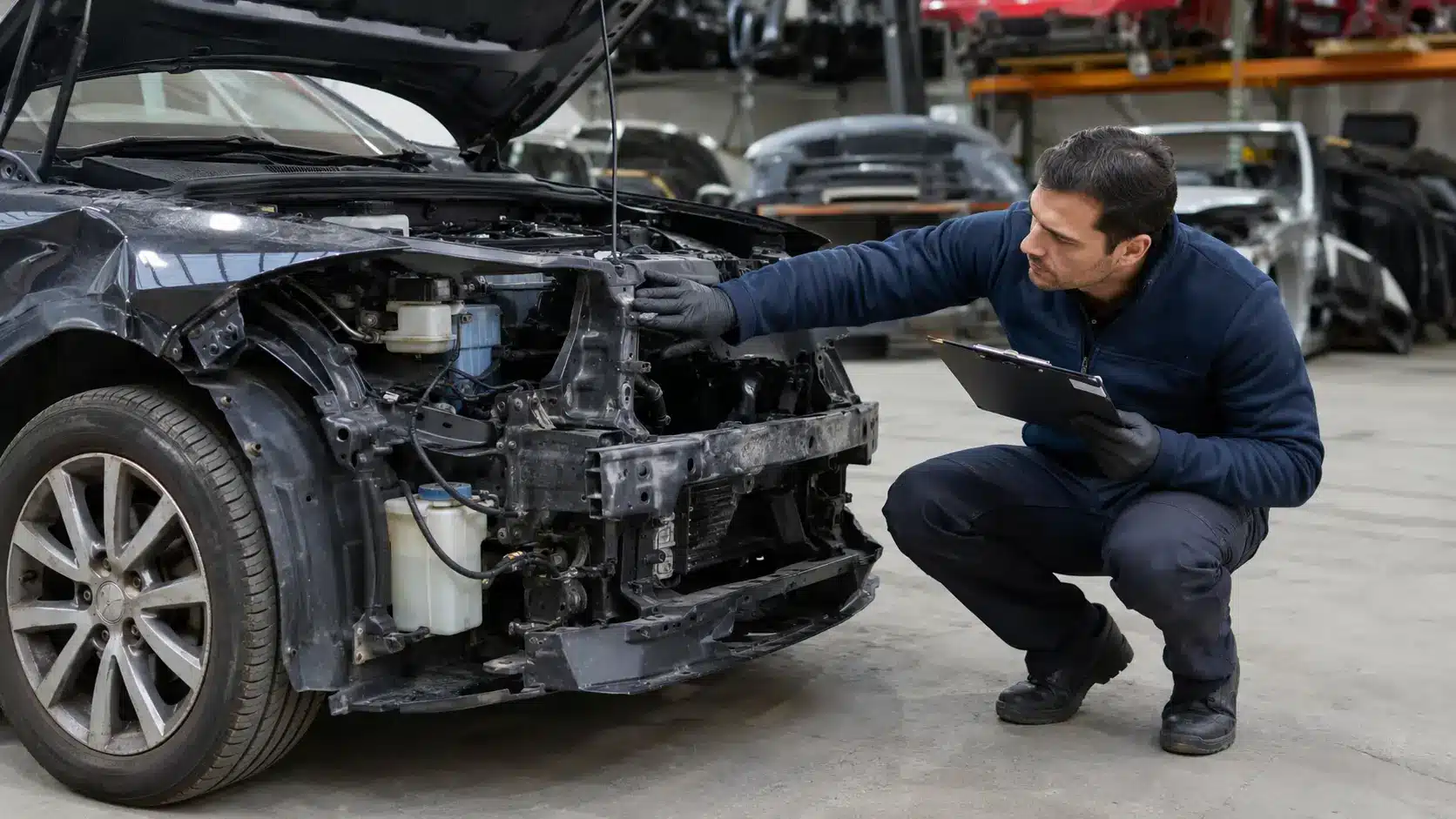
Why an Accident-Damaged Car Can Still Have Value
Even a car that looks beyond repair often holds real value. Specialized buyers purchase wrecked vehicles to salvage reusable components such as the engine, transmission, doors, catalytic converter, airbags, and radiators. Scrap metal content also contributes to the vehicle’s worth, steel, aluminum, and copper can be recycled. Because a professional dismantler can sell parts individually, they can offer more than a typical junkyard. That means your car after collision may still bring in cash that makes selling worthwhile.
What Affects Accident Car Value
Accident car value is not a fixed number. Buyers look at the severity of the collision and the overall condition. A vehicle with frame damage or a crushed roof will be worth less than one with a smashed bumper that still runs. The title matters too: a car declared a total loss receives a salvage title, which lowers resale value compared to a clean title. Insurance coverage also plays a role, if you have comprehensive or collision coverage, the insurer may cover repairs or pay out a settlement. If you only have liability, you might bear the full cost yourself, making a cash sale more attractive.
Before requesting a quote, gather the title (must be in your name), a bill of sale if available, registration, and photos or estimates of the damage. This helps buyers evaluate your car accurately and speeds up the process.
How a Crashed Car Buyer Evaluates the Vehicle
A crashed car buyer typically starts by confirming that the vehicle is in your name and that the title is clear or properly marked as salvage. Then they assess the damage: Is the engine intact? Does the car start? Are the airbags deployed? Are there reusable parts like the catalytic converter, alternator, or doors? Drivable cars are often worth more because they can be moved without towing, but even a completely non-running vehicle can be sold. Many professional buyers offer instant quotes based on photos and a short description, require no repairs from you, and arrange free towing. The process can close within 24 to 48 hours.
When It Makes Sense to Sell a Crashed Car Instead of Repairing It
Repairing a damaged car is not always the smartest move. If the repair costs exceed the vehicle’s pre-accident value, the insurance company will likely declare it a total loss. Even if you own the car outright and skip insurance, spending thousands on repairs may not be wise when the car’s post-repair value stays low. In that situation, it makes more sense to sell the crashed car as-is rather than pouring money into it. A specialized buyer can give you cash and handle the vehicle removal, saving you time and hassle. For Vancouver-area sellers, services like cash for cars Delta offer free towing and immediate payment so you don’t have to worry about transporting a wrecked vehicle.
What to Do With a Car After Collision Before Selling
Once you decide to sell, there are a few steps to take. First, secure the car in a safe location if it’s still drivable. If it’s undrivable, a towing service can pick it up. Second, gather all required documentation: the title, proof of ownership, and any repair estimates or photos. You are legally required to disclose the accident history to any buyer, failing to do so can create legal liability. Third, remove personal belongings from the vehicle. Fourth, compare offers from different buyers. Options include private sale (if the car is drivable and not too damaged), dealership trade-in (usually low payout), online car buyers (medium to high payout, fast), and local scrap or salvage yards. A total loss car buyer who specializes in damaged vehicles often gives the best combination of speed and fair price.
How an Accident Damaged Vehicle Is Valued for Parts or Scrap
An accident damaged vehicle can be worth a surprising amount if it has valuable components. The engine block, transmission, doors, hood, trunk, catalytic converter, ECU, and even the battery can be sold to rebuilders or parts recyclers. Scrap value is determined by the weight of the metal, steel, copper, aluminum, as well as current market rates. Because BC Auto Recycling disassembles cars to sell parts individually, they can often pay more than a standard scrapyard. If your car has a blown engine or collision damage that makes it unsafe to drive, selling it for parts or scrap still brings in cash. And for those in the Lower Mainland, scrap car removal Delta services handle pickup at no cost, making the transaction simple.
Frequently Asked Questions
Can I sell a totaled car without a title?
No. You need the car title in your name to sell a totaled vehicle. If you have lost the title, you will need to request a replacement from your local vehicle licensing office before completing the sale.
Do I need to repair the car before selling it?
No. It is recommended to sell a damaged car as-is rather than repairing it first. Repairs often cost more than the value they add, and buyers of wrecked cars are used to buying vehicles in their current condition.
How does a salvaged title affect the sale?
A salvage title lowers the vehicle’s resale value because it indicates the car was once declared a total loss. Buyers will factor that into their offer. You must disclose the salvage status to any potential buyer.
What documents do I need to sell a wrecked car?
You need the title in your name, a bill of sale if available, registration, and any damage photos or repair estimates. Some buyers may also request a release of interest if the car was financed.
Can I sell a car that is not drivable after an accident?
Yes. Many buyers specialize in non-running and damaged vehicles. They will arrange free towing and give you an instant cash offer, even if the car cannot move on its own.